How Avatar Customization Options Guide Player Shifts Between Live Dealer Blackjack and Multi-Hand Video Poker
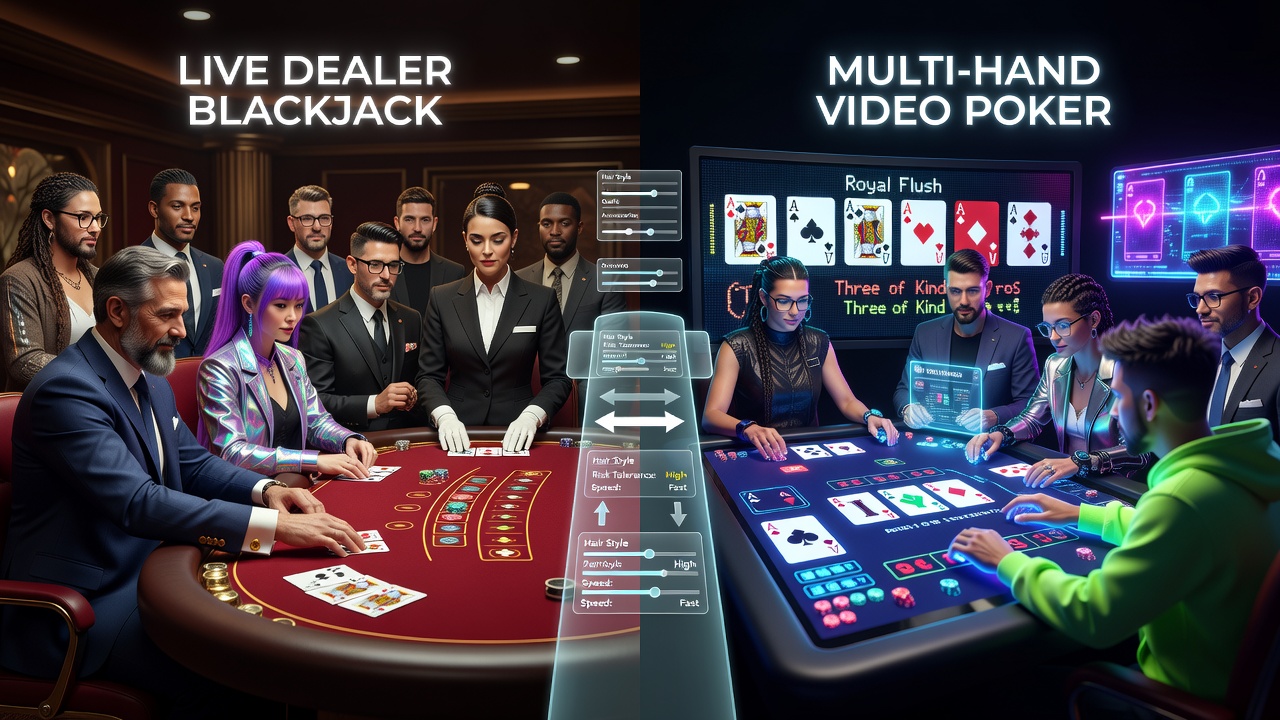
Avatar customization features have expanded across online casino platforms since 2024, and data from multiple operators shows measurable effects on how players move between live dealer blackjack tables and multi-hand video poker formats. These options allow users to adjust appearance, clothing, accessories, and sometimes behavioral traits that appear during gameplay, which creates different levels of personal investment depending on the game type.
Customization Mechanics in Live Dealer Blackjack
Live dealer blackjack environments integrate avatars into a shared virtual table where other players and the dealer can see them. Operators such as those licensed in New Jersey and Pennsylvania have added layers that include facial expressions, hand gestures, and table-side animations tied to avatar choices. Players who invest time selecting detailed avatars often remain longer at single tables because the visual identity reinforces social presence, while those who use default settings switch tables more frequently according to session logs analyzed in 2025 platform reports.
Customization in Multi-Hand Video Poker
Multi-hand video poker presents a more solitary experience, yet avatar options still appear in lobby interfaces and during hand resolution sequences. Customization here tends to focus on static profile images or animated reactions that trigger after each hand outcome. Research from the Alcohol and Gaming Commission of Ontario indicates that players who fully customize these elements complete more hands per session before exiting, whereas minimal customization correlates with quicker transitions to other game categories within the same platform.
Observed Movement Patterns Between Formats
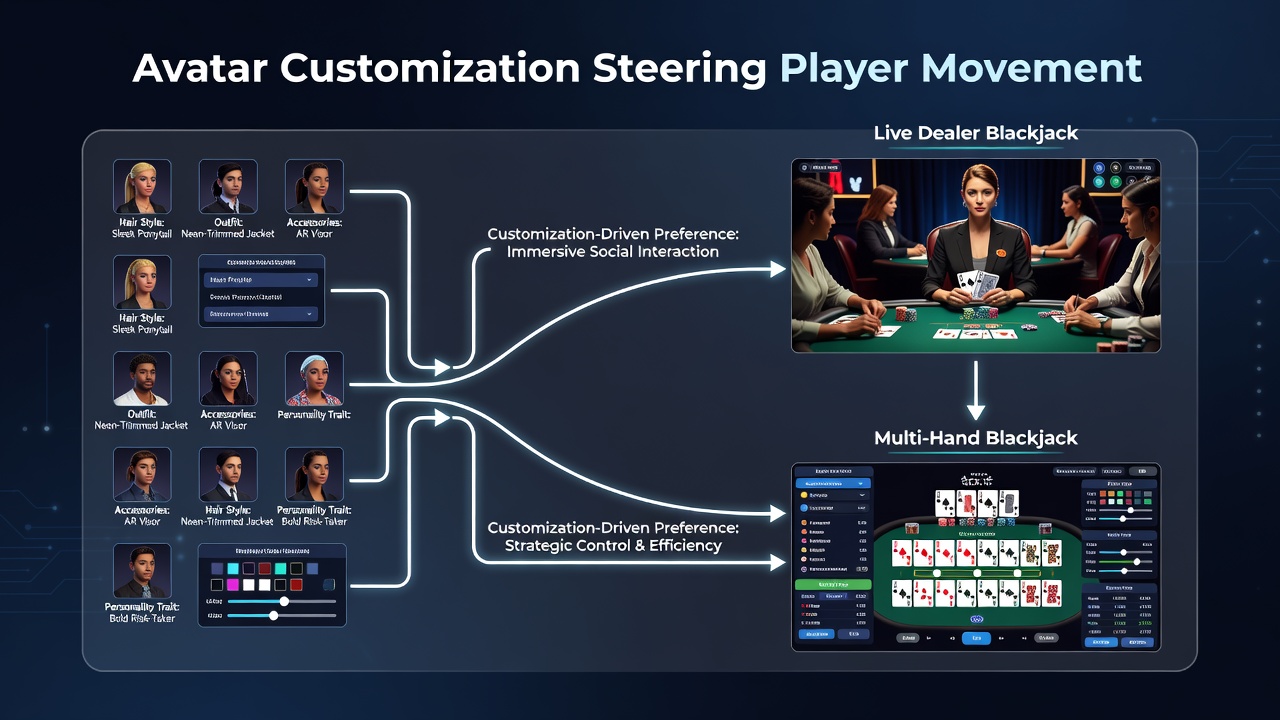
Platform analytics reveal that players who begin in live dealer blackjack and invest in advanced avatar features show higher rates of eventual movement toward multi-hand video poker when those same avatars carry over into the poker lobby. The continuity of visual identity appears to reduce friction during format changes. Conversely, players who keep minimal customization in blackjack tend to stay within live formats or exit entirely rather than sample video poker variants.
July 2026 updates to several major platforms introduced cross-format avatar syncing tools, which allow a single customized character to appear in both environments without resetting preferences. Early data from these rollouts shows increased session bridging, with players completing blackjack rounds and then immediately opening multi-hand video poker windows at rates 18 percent higher than pre-update baselines.
Data from Operator Reports and Studies
According to figures released by the American Gaming Association, platforms that emphasize avatar depth report steadier player flows between table games and video poker than those with limited options. A separate analysis conducted through the University of Nevada, Las Vegas gaming research program found that avatar persistence across formats correlates with longer overall play duration, though total wager amounts remained consistent regardless of customization level.
One documented case involved a mid-sized operator that introduced tiered avatar unlock systems tied to play volume. Players who reached higher customization tiers shifted from blackjack to video poker at twice the rate of those who remained at basic avatar stages. The pattern held across multiple months of tracked data in both 2025 and early 2026.
Factors That Influence Transitions
Several elements interact with avatar customization to steer movement. Visual continuity between formats lowers the perceived barrier to trying a new game type. Reward structures that grant avatar items based on activity in one format but usable in another further encourage exploration. Sound design and animation quality attached to customized avatars also affect dwell time, with richer feedback loops keeping players engaged longer before they consider switching categories.
Regulatory filings from the Nevada Gaming Control Board note that operators must log player movement data when avatar features connect multiple game types, yet these records focus on compliance rather than behavioral causation. Industry observers continue to track how customization depth interacts with game mathematics to shape session composition.
Conclusion
Avatar customization options create measurable pathways that influence how players distribute time between live dealer blackjack and multi-hand video poker. Data collected through 2026 shows that continuity of visual identity, depth of available features, and integration with reward systems all contribute to observed transition rates. Operators continue refining these tools while maintaining compliance with regional gaming authorities, and further platform updates will likely produce additional datasets on the relationship between personalization and format selection.