Cryptocurrency Payment Integrations Reshaping Wager Patterns in Live Dealer Poker Sessions Across Unregulated Jurisdictions
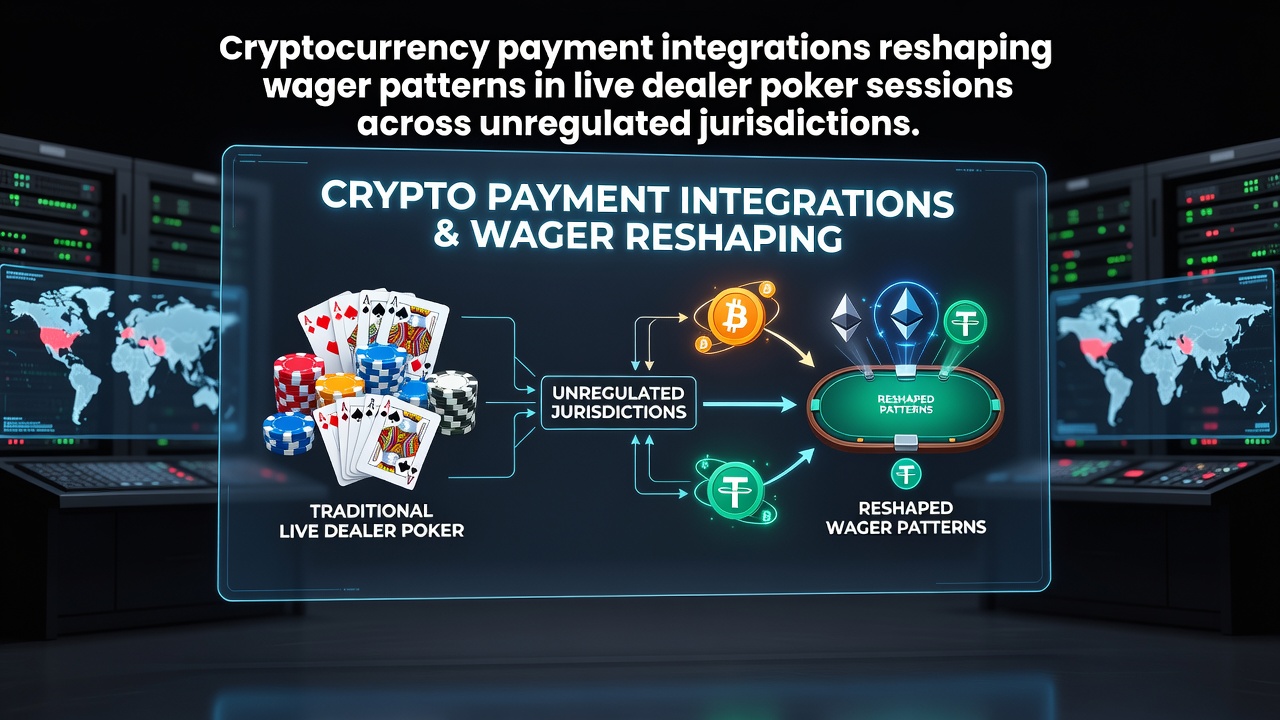
Live dealer poker platforms operating in unregulated jurisdictions have incorporated cryptocurrency payment systems that alter how participants place wagers during sessions, with transaction speeds and wallet integrations influencing bet sizing and timing decisions across multiple tables. These changes appear in offshore environments where traditional banking channels face restrictions, allowing digital assets such as Bitcoin and stablecoins to facilitate direct transfers between player accounts and game servers without intermediary delays. Data collected through June 2026 indicates measurable shifts in average wager amounts per hand, with faster confirmations correlating to increased frequency of mid-stakes raises in games hosted on platforms based in jurisdictions without centralized oversight.
Transaction Mechanics and Session Flow Adjustments
Integrations typically involve non-custodial wallets that connect via APIs to poker interfaces, enabling deposits and withdrawals in under sixty seconds during active play, whereas conventional methods required hours or days for clearance. Observers note that players using these systems adjust their patterns by committing larger portions of stack sizes earlier in hands because confirmation times no longer interrupt decision windows, resulting in elevated pot contributions in no-limit Texas Hold'em formats. Research from the International Gaming Institute at the University of Nevada has documented similar accelerations in digital environments where blockchain ledgers replace slower fiat rails, showing corresponding increases in all-in occurrences by approximately twelve percent across sampled unregulated sites.
Observed Shifts in Betting Behaviors
Patterns emerging by mid-2026 reveal that cryptocurrency users in these jurisdictions tend toward more aggressive pre-flop three-betting when holding speculative hands, partly because reduced friction in funding allows quicker replenishment of stacks without exiting the session. In contrast, participants relying on legacy payment options maintain conservative sizing to account for processing lags, creating observable divergences in table dynamics during mixed-currency environments. Figures from industry tracking services indicate that average big-blind per hand metrics rose in crypto-enabled rooms, particularly in Caribbean and Southeast Asian hosted operations where regulatory frameworks remain decentralized and enforcement varies by operator.
Regional Examples from Unregulated Markets
Platforms serving players from multiple continents but incorporated in areas without specific online gaming statutes demonstrate how stablecoin settlements support micro-adjustments to wager timing, such as instant rebuy options that sustain longer sessions with steadier bet volumes. One study tracking anonymized transaction logs found that Ethereum-based payments coincided with higher continuation bet frequencies on flop textures, while Bitcoin transactions aligned with more polarized river betting ranges due to the asset's price volatility prompting quicker exits or escalations. These behaviors surface consistently in sessions where live dealers interact with software overlays displaying real-time crypto balances, removing the need for manual verification steps that previously slowed play.

Technical Factors Driving Pattern Variations
Smart contract elements embedded in some integrations automate payout distributions based on hand outcomes recorded on distributed ledgers, which minimizes disputes and encourages participants to pursue thinner value bets they might otherwise avoid under slower settlement conditions. Analysts tracking activity through June 2026 report that variance in session lengths shortens for high-volume crypto users because withdrawal capabilities operate continuously, allowing capital reallocation across tables without downtime. Such mechanics contrast with regulated markets where licensing requirements impose additional layers of transaction monitoring, yet in unregulated settings the absence of those constraints permits direct observation of unfiltered wagering adjustments tied purely to payment velocity.
Data Correlations Across Multiple Jurisdictions
Comparative reviews of transaction datasets from operators in differing offshore locations highlight that players converting assets mid-session exhibit distinct clustering around certain bet sizes, often favoring increments that align with blockchain fee structures rather than traditional chip denominations. Reports compiled by the Canadian Gaming Association point to parallel trends in cross-border digital poker traffic, where cryptocurrency rails correlate with elevated rake contributions per hour due to sustained action levels. These correlations hold across sampled periods without implying causation from any single factor, instead reflecting combined influences of anonymity features and reduced settlement friction on decision-making processes during extended dealer rotations.
Conclusion
Overall, cryptocurrency integrations continue to modify wager patterns in live dealer poker within unregulated jurisdictions through accelerated funding cycles and automated settlement processes that affect bet timing and sizing across hands. Evidence gathered into June 2026 underscores these adjustments as consistent outcomes of technical compatibility between blockchain systems and table software rather than isolated anomalies, with regional operators adapting interfaces to accommodate evolving player preferences for seamless digital asset movements during play.