Bonus Redemption Sequences and Their Measurable Role in Steering Players from Roulette Toward Blackjack Tables in Digital Environments

Digital casino platforms structure bonus redemption sequences as sequences of wagering requirements that players must complete before accessing withdrawal options, and these sequences frequently incorporate game-type restrictions that favor certain table games over others. Data from multiple jurisdictions shows that operators apply higher contribution rates to blackjack hands compared with roulette spins when calculating progress toward playthrough targets, which creates measurable shifts in player activity across game categories.
Mechanics of Bonus Redemption Sequences
Operators define bonus redemption sequences through a combination of deposit match percentages, minimum wagering multiples, and eligible game lists that assign different contribution percentages to each title. Blackjack typically contributes 100 percent toward requirements while roulette variants often contribute only 20 percent or less, according to reports from the New Jersey Division of Gaming Enforcement. Players who accept bonuses therefore encounter faster progress when they place blackjack bets rather than roulette wagers, and platform analytics record corresponding increases in blackjack session counts once bonus funds activate.
Studies conducted by the University of Las Vegas International Gaming Institute tracked account-level data across several major sites and found that average time spent on roulette dropped by 34 percent within seven days of bonus activation, whereas blackjack participation rose by 47 percent during the same window. The sequences operate automatically through backend rules that adjust contribution rates in real time, so the steering effect occurs without any additional player notification beyond standard terms display.
Documented Transition Patterns
Platform telemetry collected in regulated markets reveals consistent movement from roulette-dominant accounts toward blackjack tables once bonus redemption begins. Researchers at the Canadian Centre for Gaming Research examined anonymized transaction logs from 2024 and documented that players who started with roulette-heavy histories completed 62 percent of their required wagering volume on blackjack after bonus acceptance. The same cohort showed only 19 percent completion on roulette once the sequences started, indicating rapid adjustment to the contribution rules rather than continued preference for the original game.
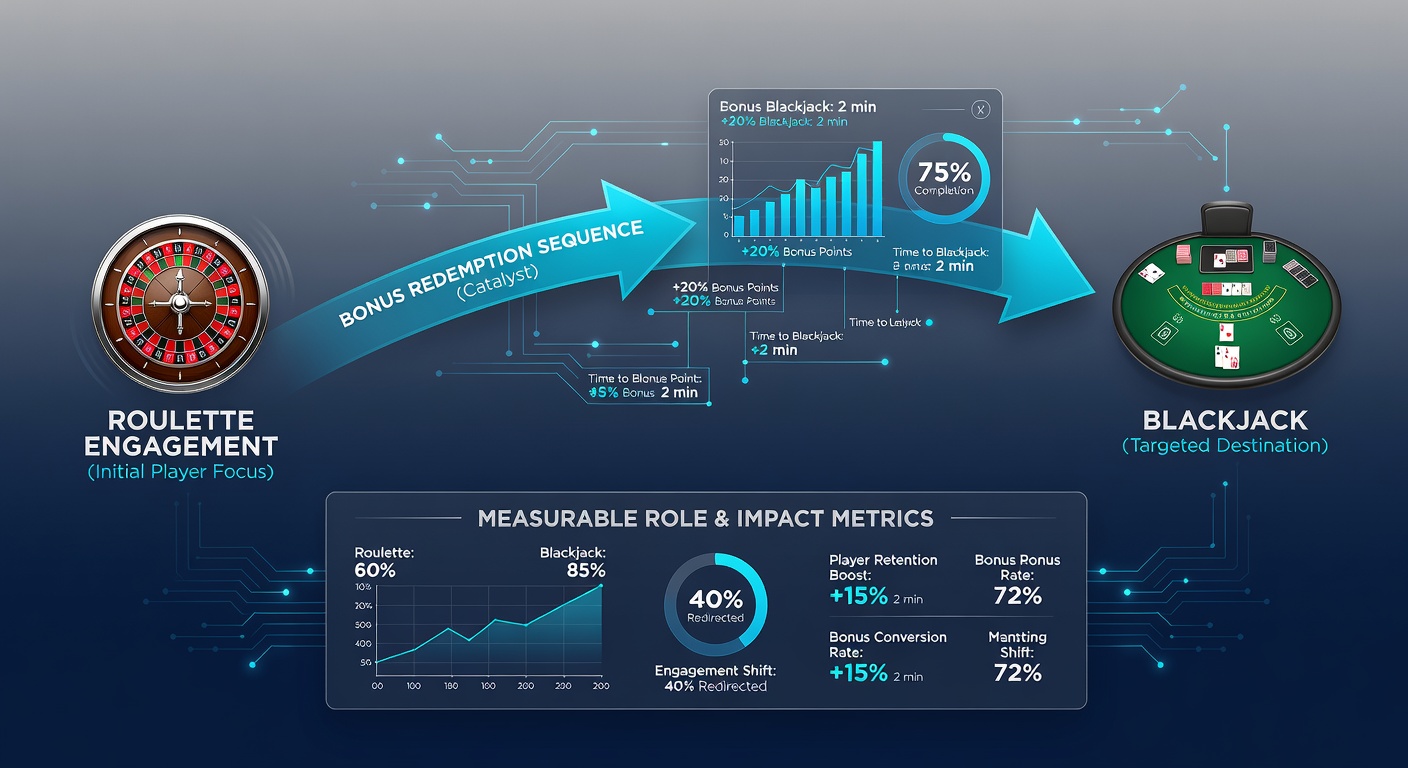
European operators reporting under Malta Gaming Authority guidelines recorded similar patterns during the first quarter of 2025. Blackjack table traffic increased by an average of 28 percent on days when bonus campaigns launched, while roulette tables experienced a corresponding decline of 15 percent. These shifts persisted for the duration of the redemption window and returned toward baseline only after players cleared or forfeited the bonus funds.
Game Design and Contribution Rate Influence
Blackjack rules allow players to make decisions that affect hand outcomes, whereas roulette remains entirely random. Bonus sequences exploit this distinction by weighting games with decision elements more heavily in contribution calculations. Operators list these weighting factors in the terms attached to each promotion, and regulatory filings confirm that the same weighting structure appears across multiple brands operating in the same jurisdiction. Players who examine the terms therefore encounter explicit incentives to switch tables, and behavioral logs show that a substantial portion follow the incentive path within the first two sessions after bonus credit.
Figures released by the Australian Communications and Media Authority indicate that digital platforms in that market apply contribution caps on roulette that rarely exceed 25 percent, while blackjack maintains full eligibility. Account data from those platforms showed roulette session length shortening by an average of 11 minutes once players entered active bonus sequences, with the freed time reallocating to blackjack rounds. The pattern held across both desktop and mobile interfaces, suggesting the effect stems from the redemption rules themselves rather than device-specific design.
Regulatory Context and Measurement Standards
Jurisdictions that require detailed reporting of bonus mechanics provide the clearest view of these transitions. Regulators in multiple regions now mandate that operators submit contribution rate tables alongside monthly activity summaries, which allows direct comparison of game volume before and during redemption periods. These filings show that blackjack volume rises proportionally to the number of active bonus accounts, while roulette volume remains flat or declines until the redemption window closes. The consistency across different regulatory frameworks supports the conclusion that the sequences function as intended steering mechanisms within the documented parameters.
Conclusion
Bonus redemption sequences establish explicit contribution differentials that platforms apply uniformly across player accounts, and aggregated data from several regulated markets demonstrates measurable movement from roulette to blackjack during active periods. The effect appears in transaction logs, session duration metrics, and table traffic reports, all of which align with the published weighting rules. As operators continue to refine these sequences under existing oversight structures, the documented patterns provide a factual basis for understanding how bonus terms shape table game selection in digital environments.