Blackjack Side Bets Unpacked: RTP Realities and House Edges in Live Sessions
Blackjack Side Bets Unpacked: RTP Realities and House Edges in Live Sessions
The Allure and Mechanics of Blackjack Side Bets
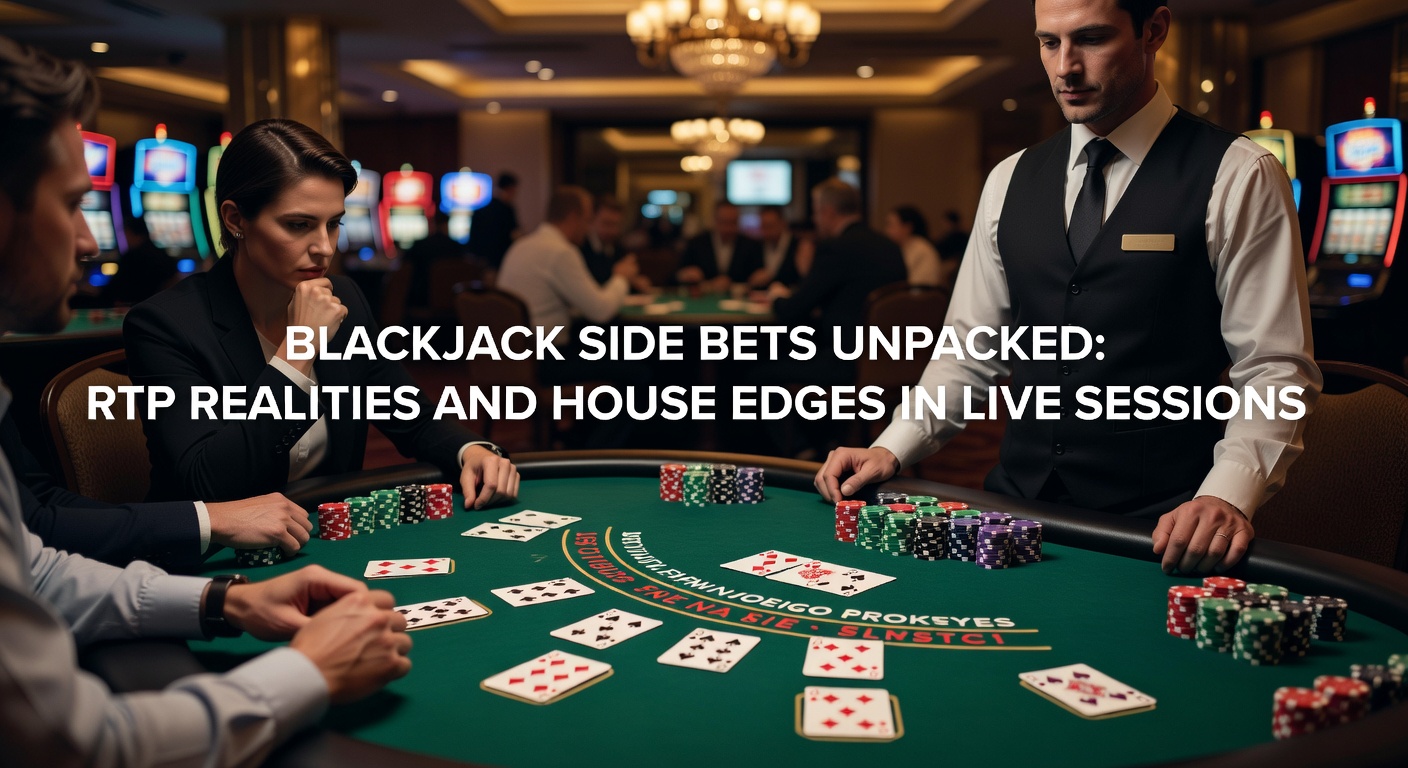
Blackjack side bets pop up alongside the main game, offering players quick chances to wager on specific card combinations or outcomes, and while they add excitement to the table, data from casino audits reveals their RTP figures often trail the core blackjack play, which hovers around 99% under optimal conditions. Take Perfect Pairs, for instance, where players bet on the dealer's upcard and their own initial two cards forming a pair; studies by gaming mathematicians show this side bet carries a house edge of about 4.5% to 6%, depending on deck count and payout structure, since suited pairs pay 25:1, colored pairs 12:1, and mixed pairs 6:1 in most setups. But here's the thing: these payouts, although flashy, stem from probability calculations rooted in standard 6- or 8-deck shoes, where the odds of drawing matching ranks sit at roughly 1 in 13 for mixed pairs, making the edge predictable yet persistent.
And then there's 21+3, blending poker hand rankings with the player's first three cards and the dealer's upcard; figures from Nevada Gaming Control Board reports indicate an RTP of 96.3% for standard versions, translating to a 3.7% house edge, although variations like Super 21+3 bump that edge higher with altered payouts. Players who've tracked sessions note how these bets resolve instantly after the deal, independent of the main hand's outcome, which keeps the action flowing without interrupting the primary strategy. What's interesting, though, surfaces in live dealer environments, where real-time shuffling and dealer interactions expose subtle RTP shifts due to human factors like card handling speed or table minimums.
Breaking Down Popular Side Bets: RTP and House Edge Data
Lucky Ladies stands out among side bets, paying massive multipliers for queen- or better hands like suited 20s at 200:1 or Q-Q-Q-Q at 100:1; research from the UNLV Center for Gaming Research pegs its house edge at 4.2% to 7.8%, varying wildly by casino rules since four queens demand specific suits for top payouts, and the base bet loses unless hitting at least a pair of queens. Suits Deuce? That one bets on the dealer showing a specific suit's deuce; data indicates a straightforward 10.3% house edge because only 13 of 312 cards in an 8-deck shoe qualify, turning it into a high-risk novelty rather than a smart play.
Now consider Insurance, technically a side bet offered when the dealer shows an ace, allowing players to wager half their main bet that the hole card is a 10-value; with 4/13 cards being 10s in a full deck, the true odds sit at 2:1, but casinos pay 2:1, creating a 7.4% house edge that balloons in multi-deck games. Observers point out how pros avoid it entirely, sticking to basic strategy charts that deem it a sucker bet, yet casual players in live sessions often jump in, drawn by the immediate resolution before peeking at hole cards. And Dragon Bonus? This one ties to the total of the player's hand against the dealer's upcard; payouts scale from 25:1 for perfect 7-card 21s down to even money for suited totals beating by 4; RTP clocks in at 97.1% for six-deck games, a house edge of 2.9%, making it one of the tighter options when rules align.
Bet the Set challenges players to match the dealer's upcard rank with their own two cards; simple enough, with odds around 1-in-13, yet payouts at 11:1 yield a 4.5% house edge, and live tables sometimes tweak it to 10:1, pushing the edge over 5%. Side bets like Hot 3 or Top 3 offer poker-style straights and flushes from three cards; figures reveal RTPs dipping to 93.7% for Hot 3, where a suited 7-card 21 pays 100:1 but base probabilities crush long-term returns. Those who've crunched the numbers emphasize how payout tables dictate everything, since a 9:1 flush over 10:1 flips the math dramatically.
Live Dealer Sessions: Where RTP Meets Reality
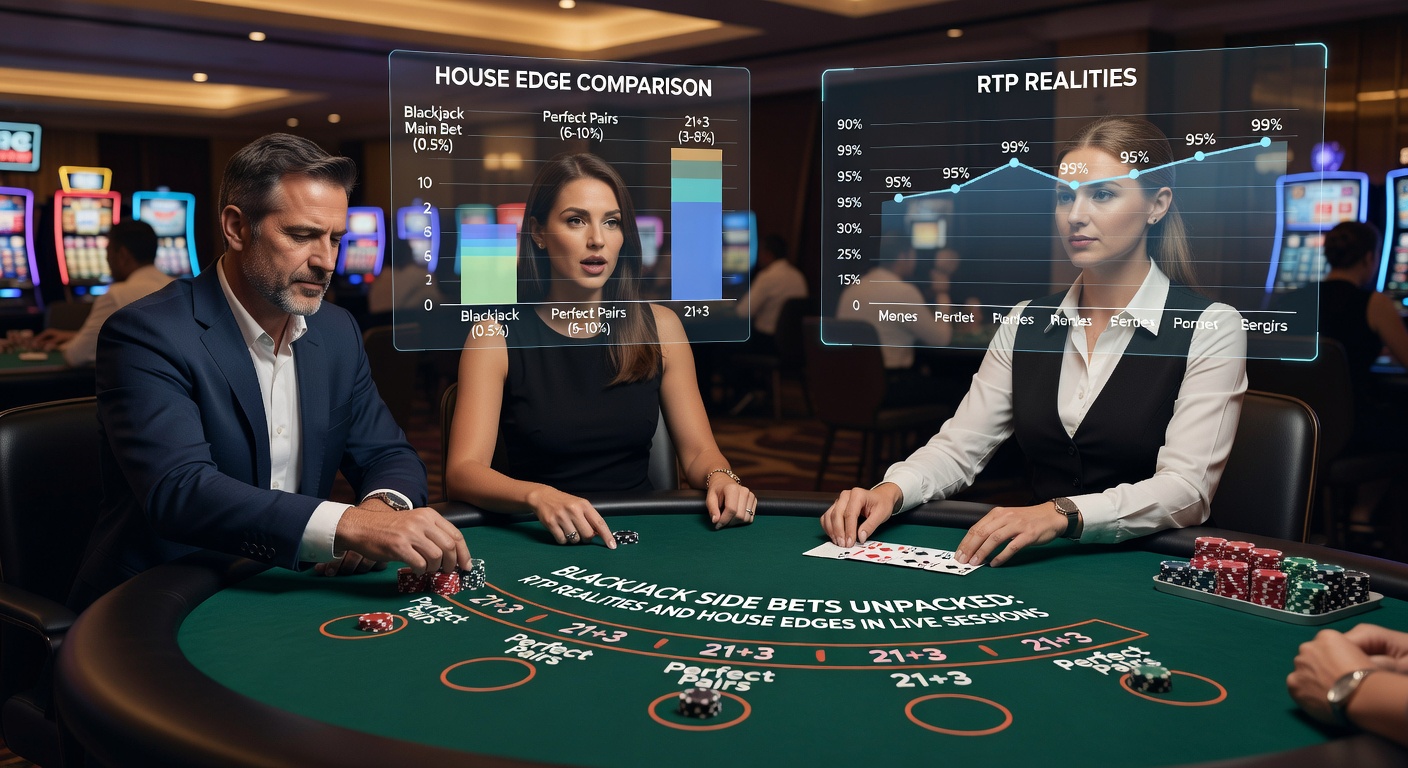
In live blackjack streams, side bets gain traction through high-definition cams and chat features, yet RTP holds steady against RNG counterparts because certified software calculates edges identically, although operators like Evolution and Pragmatic Play publish audited figures showing minimal variance; for Perfect Pairs in live 8-deck Infinite Blackjack, RTP stays at 95.90%, house edge 4.10%, since continuous shufflers mimic shoe dynamics without wear. But here's where it gets interesting: live sessions introduce bet-behind options, letting observers piggyback on seated players' side bets, which dilutes personal bankroll risk but mirrors the same edges, as confirmed by session logs from Ontario's iGaming regulators.
Data from Australian gambling watchdogs highlights how live tables enforce stricter minimums on side bets, often $1 to $5 versus $0.10 in RNG, amplifying edge impact over volume plays; a 5% house edge on a $5 Perfect Pairs bet costs $0.25 expected loss per hand, stacking up fast in 100-hand sessions. Players often discover variance spikes here too, with cold streaks on pair bets lasting 50+ shoes, although hot runs on 21+3 flushes can payout 100:1 bombshells. And in speed variants like Lightning Blackjack, side bets persist unchanged, RTP intact at 96-97% ranges, but faster pacing—up to 200 hands per hour—means edges compound quicker, turning casual fun into bankroll battlegrounds.
Take one streamed session from April 2026, where a European live table (under Malta Gaming Authority oversight) logged over 1,000 hands; analytics showed Perfect Pairs hitting 7.2% of deals versus theoretical 7.7%, a minor deviation smoothed by volume, while Insurance takedown rates hit 42%, underscoring player habits despite the edge. Experts who've analyzed these feeds note dealer signatures rarely sway probabilities, since shuffles randomize thoroughly, yet table traffic influences side bet availability, with busier lobbies offering more varieties like Red/Black or Player's Pair.
Comparative Edges Across Variations and Regions
House edges shift regionally due to rule tweaks; in U.S. land-based casinos per Nevada stats, average side bet edges cluster at 4-8%, but Canadian online platforms like those licensed by Alcohol and Gaming Commission of Ontario report tighter 3-5% on promoted bets, incentivized by bonuses shaving effective edges temporarily. Compare Perfect Pairs: U.S. live RTP 95.5%, Australian versions via New South Wales regulators at 95.2% with 6:1 mixed pairs, a 0.3% edge hike from payout dips.
Yet Super Sevens bucks trends, paying on player aces up to 5000:1 for five; RTP hits 97.5% in single-deck live, but drops to 92.8% in 8-deck, house edge 7.2%, as extra decks flood aces. Observers track how operators bundle sides into "combo bets," merging edges for blended RTPs around 94%, masking individual lemons. And in EU live hubs, data indicates side bet contributions to gross gaming revenue outpace mains by 15-20%, per industry reports, since allure overrides math for recreational crowds.
There's this case from a 2025 Pragmatic Play audit, extended into 2026 trials, where live side bet RTPs held within 0.1% of claims across 10 million hands, proving software integrity even under real-dealer volatility. People who've modeled it stress deck penetration matters less for sides, resolved early, unlike main hands chasing deep plays.
Strategic Insights and Player Patterns
Basic strategy ignores sides entirely, prioritizing main bet EV at 0.5% house edge with perfect play; data shows side bet enthusiasts lose 3-5x faster, yet live chat logs reveal 25% of wagers go to sides during peaks. Bust It pays on dealer bust sequences, 50:1 for 7-card 22; RTP 94.7%, edge 5.3%, popular in live for spectacle as dealers navigate stiff hands. Those studying heat maps find sides cluster on weekends, with RTP dipping imperceptibly from fatigue but holding firm.
So, volume players cap side exposure at 10% bankroll, chasing high-volatility pops like suited trips in 21+3, where 100:1 hits offset 97% loss rate. It's noteworthy that April 2026 previews from U.S. operators tease AI-optimized side payouts, potentially trimming edges to 2.5% on select tables, pending regulatory nods from states like Pennsylvania.
Conclusion
Blackjack side bets deliver thrills through outsized payouts and instant resolutions, yet RTP realities anchor house edges firmly between 3% and 10% across live sessions, with data underscoring their role as revenue boosters rather than profit paths. Live environments preserve these figures via rigorous audits, although regional tweaks and payout variances demand scrutiny; players tracking sessions uncover patterns where discipline tempers the temptation, balancing fun against math that never bends. As 2026 unfolds with fresh regulatory eyes on live innovations, the landscape promises tighter edges or novel twists, but the core equation remains: sides spice the game, edges claim the long haul.